What If Your Wealth Was Measured by What You Give?
Most of us are reasonably fluent in the language of financial wealth. We know what we earn, what we own, what we owe and, if we're being particularly responsible, what we have managed to save.
But there is another kind of wealth that doesn't appear on a bank statement.
You can see it when someone has people who will answer the phone at 2am. You can see it in the knowledge passed between generations, in the meal that appears when somebody is struggling, in the person who turns up because you've spent years turning up for them. You can see it in the trust that accumulates slowly through a lifetime of relationships.
For Aunty B, that is wealth.
And her definition is rather more interesting than the one most of us inherited.
The more you give, the richer the community becomes
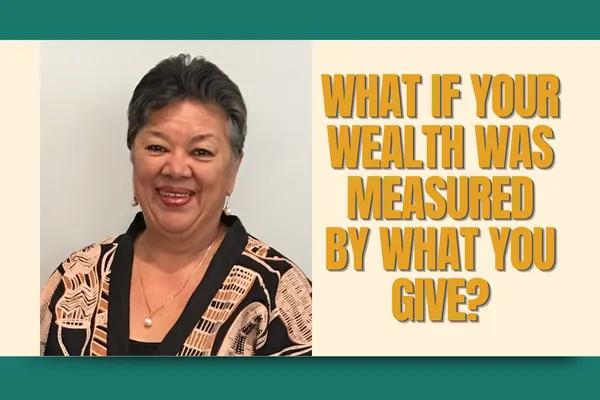
Aunty B, a Larrakia woman, elder, healer and cultural leader, describes wealth through a very different lens from the familiar Western emphasis on individual accumulation.
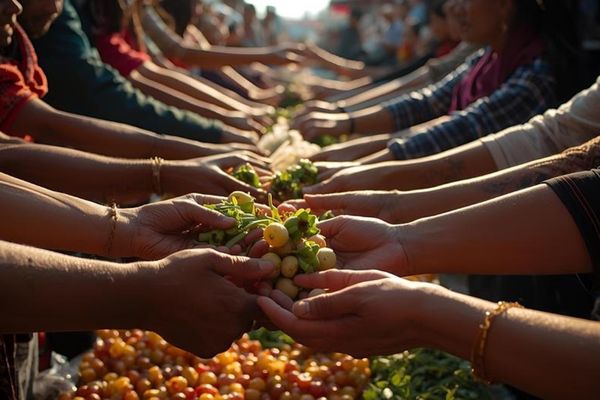
As she puts it, “The more you give, the richer we are in our community.”
It is an arresting idea because it turns the usual logic of wealth upside down. In the conventional model, having more often means keeping more: more money, more property, more possessions, more status.
Here, richness is relational.
Aunty B talks about food, shelter, caring for Country, ceremony, family and looking after one another. She also tells a wonderfully funny story about being the eldest sister in a large family. With nine brothers, she jokes that she's “really, really rich because they owe me”.
Beneath the humour is something worth noticing. The wealth isn't the debt. It's the relationship that created it.
Years of feeding, helping, supporting and contributing have produced a network of people she can rely on when she needs them. That is a form of security, but it is not security that can be purchased separately from the relationships themselves.
It has been built over time.
For women navigating midlife, that is an interesting challenge to the scoreboard we often carry around in our heads. How much have I earned? What have I achieved? What have I built? Am I still progressing?
Perhaps another question belongs alongside those:
Who would be there for me because I have been there for them?
A different way to think about legacy
We often talk about legacy as something that comes after us. A book, a business, a house, an inheritance, a body of work. Something substantial enough to remain once we're no longer here to see it.
Aunty B's perspective makes legacy much less grand and much more immediate.
It can happen today.
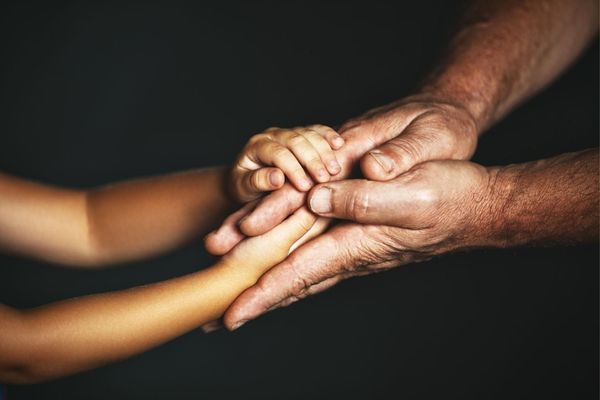
It can happen in a conversation, a shared meal, an act of care or a piece of knowledge passed from one person to another. It can happen when someone remembers how you made them feel, even if you've completely forgotten the interaction yourself.
This is where her idea of “seed dreaming” becomes particularly compelling.
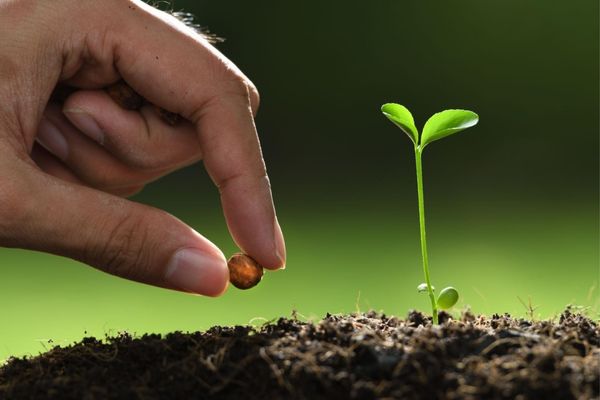
Aunty B describes small acts such as smiling at a stranger or offering a genuine compliment — telling someone they have beautiful eyes or that you like their dress, then continuing on your way.
There is no transaction. No expectation that the person will remember your name. No carefully constructed act of personal branding.
Just a small intervention in somebody else's day.
The person giving the compliment may forget it five minutes later. The person receiving it might carry it for much longer.
That makes “legacy” sound rather different.
Instead of asking, What will I leave behind?, we might ask, What am I leaving in people?
Contribution doesn't have to be enormous
There is another reason this idea matters in the messy middle: it takes some of the pressure out of the word purpose.
Purpose can become strangely grandiose. We're encouraged to find our calling, change the world, make an impact and leave a legacy, as though a meaningful life requires a sufficiently impressive project.
Aunty B's perspective is much more grounded.
Contribution can be enormous. It can also be ordinary.
You might care for an elderly parent. You might teach a grandchild something your own grandparents taught you. You might make someone's difficult day slightly easier. You might preserve a story that would otherwise disappear. You might simply become the person people know they can call.
None of those things necessarily make an impressive LinkedIn headline.
They can still make a rich life.
That distinction matters because achievement and contribution are not the same thing. Achievement tends to be visible, countable and individually attributable. Contribution is often messy and shared. It happens in relationships, and its effects may never be neatly traceable back to you.
What happens when wealth becomes relational?
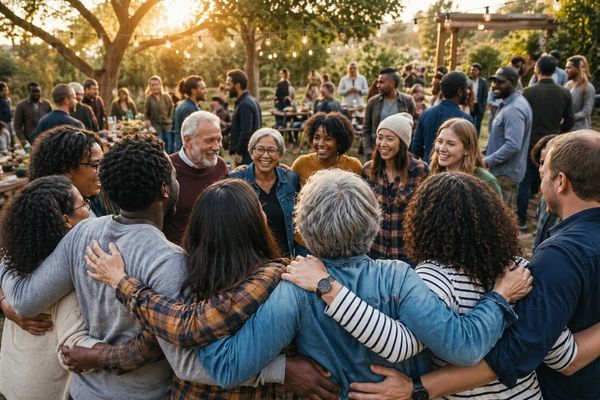
This is where Aunty B's idea intersects with something Gry noticed in the conversation: perhaps our relationships with ourselves and the people around us are forms of inner wealth too.
That feels particularly relevant when the usual markers of success begin to change.
Careers shift. Children become independent. Bodies change. Parents need more support. Some roles disappear while others arrive without invitation. The things that once gave life structure can suddenly feel less certain.
At those points, a balance sheet tells only part of the story.
So does a CV.
The richer question may be: What relationships, knowledge, care and trust have I accumulated — and what have I contributed to create them?
This isn't an argument against money. Money matters. Financial security matters. Aunty B's definition simply refuses to let money be the only measure.
It asks us to widen the ledger.
Try a different wealth audit
If you want to experiment with the idea, don't start by counting your possessions.
Think instead about the people, relationships and contributions that make your life richer.
Who knows they can rely on you?
Who would you call if you needed help?
Whose life have you made easier?
What knowledge have you passed on?
What have you learned from someone older than you?
What have you given that cannot be bought back?
And perhaps the most Aunty B question of all: what did you do yesterday that helped somebody else?
The point isn't to turn generosity into another productivity metric. That would rather miss the point.
It is simply to notice that a life can accumulate things that don't fit neatly into a financial definition of wealth.
Aunty B's invitation is not to give everything away until there's nothing left of you. It is to recognise that some forms of wealth become richer through circulation.
A meal shared. A story remembered. A hand offered. A relationship tended.
Perhaps that is one of the stranger truths about being human: some of the things that make a life richer are precisely the things we cannot keep for ourselves.
Podcast Invitation
In the full Vitalify Unplugged conversation with Bilawara Lee, Aunty B takes the idea of wealth much further — into Country, culture, storytelling, family, legacy and the small acts she calls “seed dreaming”. There is also a wonderfully unexpected conversation about traditional healing that takes the episode somewhere you probably won't predict from the title. Listen to the full episode to hear her explain these ideas in her own voice.
