What Are You Training For?
What if the point of getting stronger in midlife isn't to look younger — but to keep having choices about how you live?
There is a particular kind of fitness culture that asks women to spend a surprising amount of energy trying to return to a body they had ten, twenty or thirty years ago. Smaller waist. Lower number on the scales. Younger-looking skin. More disciplined eating. A little less softness around the edges.
But what if that isn't the most interesting question?
What if the better question is: What do you want your body to be able to do for you?
That shift sounds subtle, but it changes almost everything.
It changes what counts as progress. It changes why you exercise. It changes how you respond when your body changes. And, perhaps most importantly, it moves the goal away from fighting ageing and towards protecting your ability to participate in your own life.
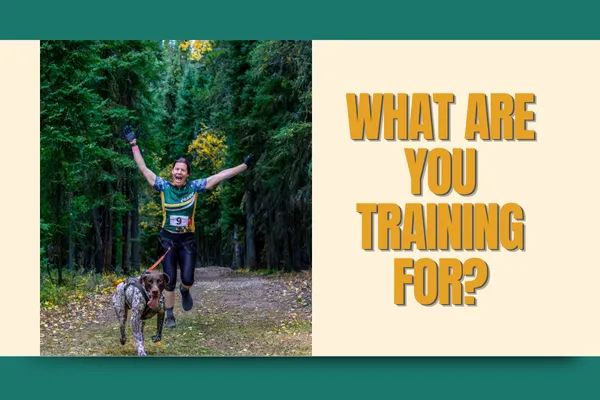
That is one of the ideas that stayed with us after talking to Karen Kohler-Sergeant, a personal trainer and health coach who, at 53, competes internationally in skijoring with her dogs. Her story is remarkable, but the medals aren't actually the most interesting part.
The more interesting question is what she is training for.
Fitness isn't necessarily about looking fit
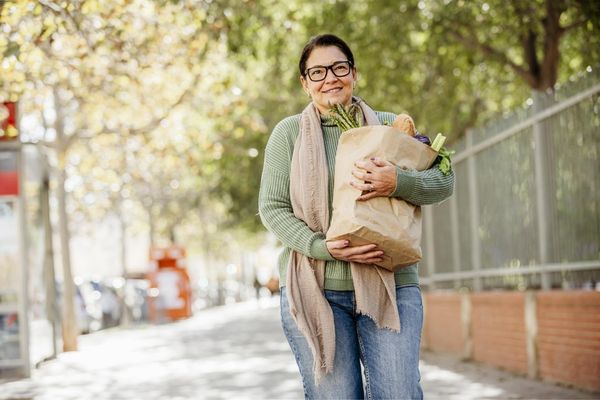
Karen's experience challenges a familiar cultural script about women and ageing: that after a certain point, the best we can hope for is to manage decline.
Her own story is considerably less resigned.
She has lived through chronic pain, nausea and health problems that made her wonder whether feeling unwell was simply something she would have to accept. Over time, she began experimenting with how she supported her body, paying attention to what changed and adjusting accordingly.
That curiosity eventually became part of the way she works with other women.
But Karen isn't suggesting everyone should become an elite athlete. Quite the opposite.
The goal depends on the life you want.
For one person, strength might mean competing at an international level. For another, it might mean carrying a grandchild, hiking with friends, travelling without worrying about whether their body will cope, getting down onto the floor to play with children and getting back up again, or remaining independent well into later life.
There is something liberating about that definition of fitness.
You don't have to want Karen's life.
You just need to know what you want your body to help you do.
The body becomes a means to an end
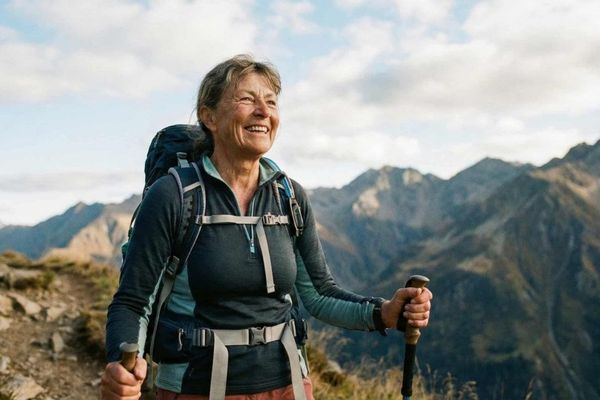
This is where the distinction between training for appearance and training for life becomes particularly useful.
If the only goal is to look different, exercise can become another form of self-surveillance. Every session becomes evidence for or against whether you are succeeding. A missed workout becomes a failure. A change in weight becomes a verdict. An ache becomes something to push through because stopping feels like losing ground.
But if your goal is capacity, the questions become much more interesting.
Can I get stronger?
Can I improve my balance?
Can I maintain mobility?
Can I recover well enough to do the things I enjoy?
Can I build enough physical reserve that a setback doesn't completely derail my independence?
Can I keep doing the things that make me feel like myself?
Gry's perspective on the conversation sits naturally here. She isn't anti-data or anti-goals. Her question is what the goal is actually for. Health information can be useful, measurements can be useful and training targets can be useful. But they are means, not the destination.
The destination is a life you still have the capacity to participate in.
And then there is the part women are often taught to feel guilty about
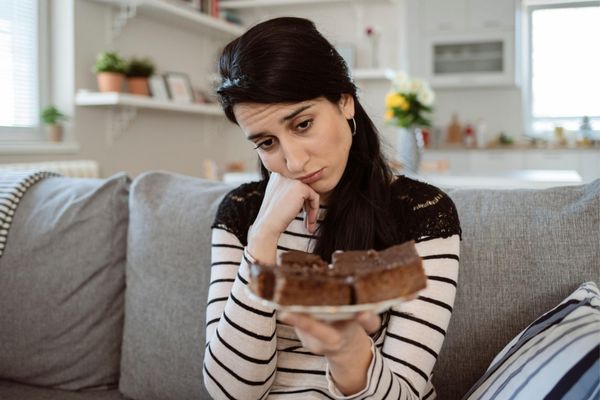
Karen also challenges another idea that sits underneath many women's experiences of midlife: that looking after yourself is somehow a selfish act.
It is an odd equation when you think about it.
Women can spend years being responsible for children, partners, ageing parents, households, workplaces and everyone else's emotional weather, while treating their own physical needs as negotiable. Exhaustion becomes normal. Putting yourself last becomes evidence that you care.
But there is a practical problem with that arrangement.
A depleted person has less capacity to do the things they value.
Karen's point isn't that women should disappear into a wellness bubble and ignore everyone else. It is that caring for yourself can increase what you have available to give.
That feels particularly important in the messy middle, when there may be more responsibilities rather than fewer. Your body isn't only something you carry through this period. It is the thing that has to carry you through it.
And that makes physical capacity a form of freedom.
The question changes with age
There is a strange contradiction in the way we talk about longevity.
We want longer lives, but we don't always talk about what we want those extra years to feel like.
Karen's approach offers a more useful way to think about it.
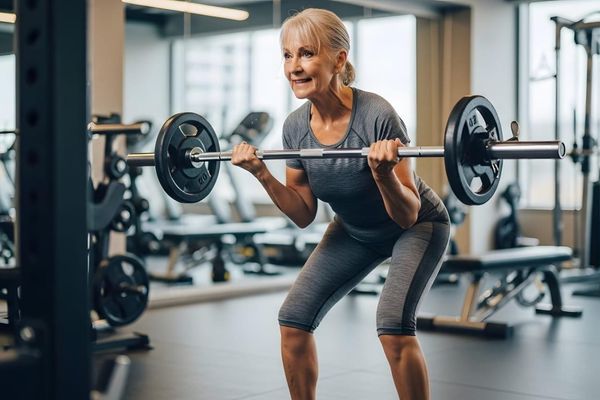
Rather than asking how to stay young, perhaps we could ask how to stay capable.
Rather than asking how to get our old body back, perhaps we could ask what our current body needs in order to support the life ahead.
Rather than training because we dislike what we see in the mirror, perhaps we could train because there are still places we want to go, people we want to spend time with, things we want to learn and experiences we haven't finished having.
That doesn't mean appearance stops mattering. It means it doesn't have to be the only reason.
So, what are you training for?
This is the question worth borrowing from Karen's philosophy.
Not: What should my body look like?
Not even: How young can I make myself feel?
But: What do I want to be able to do?
The answer might be very ordinary. Walk the Camino. Keep skiing. Garden without wrecking your back. Dance at your daughter's wedding. Travel when you're seventy. Lift your suitcase. Get up from the floor. Keep playing with the dog. Have enough energy left at the end of the day to enjoy your life rather than simply recover from it.
Those goals may not look impressive on Instagram.
They may be much more important.
Because the point of building a stronger body isn't necessarily to become a more impressive version of yourself. It may simply be to give yourself more options.
And in midlife, when so much can feel as though it is changing without your permission, capacity and choice are not small things.
A question to take with you
Think about a life you would genuinely like to be living at 70 or 80.
What would you need your body to be able to do?
That might tell you more about how to train today than a number on a scale ever could.
Listen to the conversation
Karen's story goes well beyond exercise. In the full Vitalify Unplugged conversation, she talks about her own experience of pain and health changes, how she works with women through small sustainable shifts, the role of community and support, and why she believes we need to develop a different relationship with our bodies.
